Uta Barth

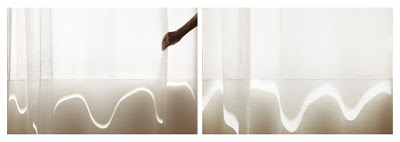
I have been wanting to share the work of Uta Barth for sometime now, ever since I saw her exquisite exhibition at the Chicago Art Institute this past summer. It happened to coincide with my long swims in Lake Michigan where I would study the light patterns not only on the surface of the water but also on the sand under the shallow waters.
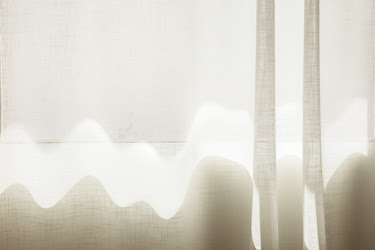


I was memorized by the quiet elegant images that Barth created from what I can gather, a place of deep meditation. In one room, you are surrounded by the bands of light that are reflected in hanging curtains, an ordinary sight that was transformed into the extraordinary. It reminded me of a exhibition I saw many years ago at the Met where I was in a room surrounded by Monet's Water Lilies.
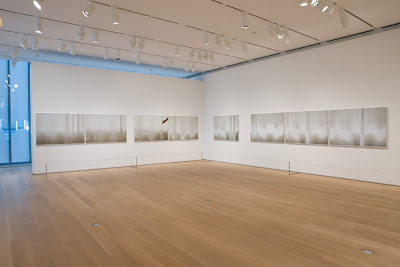


I am so appreciative to share the following essays provided by Uta Barth that further illuminate her work.

Barth writes

"…to walk without destination and to see only to see.

I am interested in visual perception.

I am interested in getting you to engage in looking rather than losing your attention to thoughts about what you are looking at.

Seeing Is Forgetting the Name of the Thing One Sees is the title of Lawrence Weschler’s biography of Robert Irwin. Long before that, it was a line in a Zen text. Nothing could better describe what I aim for with each project I make, over and over, yet each time in a different way.

If the subject of the work is perception and not what the camera is pointed at, then there is no point in “going out to photograph.” Given that, ten years ago I made the “choice of no choice”: I would only photograph wherever I happened to be most of the time, the interior of my own home.

But you still have to point the lens someplace. So you let it follow your gaze, allow it to stare at the same thing for hours and months, or to simply trace light and time. To render light, time, silence, and negative space; to see the volume of a room instead of its walls and then to trace vision where the camera cannot follow and to look at what you see with one’s eyes closed, by tracing the play of afterimages the human eye plays out for us. All of this is what I have pursued.

Always about vision, being immersed in vision, always about “now.” This is what motivates the work and what motivates my day."
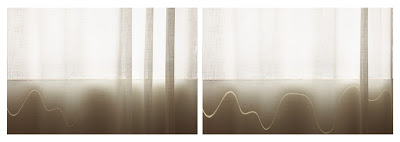


The color of light in Helsinki

Uta Barth 2004

‘What about perception?’

For years I have been talking about my work in terms of perception and countering other, more romantic, interpretations of it. Visual perception has been and continues to be the primary point of entry for thinking about the art I make, and for most of the things I do and I think about. Some time ago, while working on a text about my work, critic Timothy Martin asked me what I thought was a startling – and quite annoying – question: ‘What about perception?’ I had always completely taken for granted the answer to this question; so, although I can’t claim to explain all the aspects that interest me, I thought I’d make a sideways, sort of drifty stab at responding to some parts of that question here.1

Inside out

I remember:

The colour of light on the harbour in Helsinki.

The warm grey of the sky in Berlin.

Dense heat and humidity in the Yucatan. Standing there, in a field, being drenched with rain that was warmer than even my skin.

Driving into a cloud of white butterflies, so large, so dense that it obscured all vision of the road and the sky.

The glowing yellow light that streaks across my bedroom walls at 5:30 in the morning.

The sound of car tyres moving across an empty desert road on a hot summer night.

A cool night, bright moon, warm pool. Watching the steam rising.

The smell of the desert ground after a rainstorm.

Bare feet on warm sticky pavement. A Hollywood side street late one Saturday night.

Floating in a pool in the desert during a summer thunderstorm. Cool water falling on wet skin.

Looking into your eyes and the light reflecting in them. Looking past that light.

Something so far off in the distance, barely discernable, barely visible. Deep space.

Watching you walk away, walk into the dense rain. Watching your silhouette disappear into it.

The sudden feeling that someone is looking at you from behind.

Charcoal grey clouds moving towards me as I looked over your shoulder while we talked.

Squinting into piercing bright light. The look of the bleached and white landscape in Mexico.

Being on a fast train in Europe. A rainy landscape flying, streaking by in a flash of green.

The pale, slow fade of grey where the Glendale smog meets the sky.

Heat radiating, waving up from black asphalt, on a hot desert road. The smell of that.

A wall of water falling through the sky. Watching a storm in the distance.

The green glowing after-image of light caused by staring too hard and too long into a blinding, bright sky.

I remember each of these moments with a crystal clarity and completeness that even the present too often lacks. To this day I can see them, hear them; I can feel the humidity on my skin. Yet I remember little or nothing of the surrounding events.

Clearly these might be scenes that lend themselves neatly to romantic or melancholic interpretation – perhaps even nostalgia and longing? They would nicely set the tone for song lyrics that one might write (‘For you’), or be the opening lines of a novel; after all they would all start with ‘I remember’, and each scene is quite solitary in nature. All the right stuff: what desire is made of. Since I am cursed with the capacity for pining, I might find this way of seeing it a useful one.

But …

But, perhaps, there is another way to look at this list (a list that could potentially continue ad infinitum.)

I assume all of us have such a list; but this one is mine.

Perhaps it exists because these are fragments of time when I was ripped from the flow of narrative into a single moment. A moment when sound and vision were inverted themselves, torn inside out and filled my attention to capacity. A moment when everything else dropped away and the experience of seeing, of sensing, became so overwhelming, so all-encompassing, that the very idea of interpretation did not, could not, exist.

This is an interesting space of mind: when we lose all assumed meaning; lose the inevitability of narrative; lose the impulse for interpretation. A space of mind that is dislodged from making meaning and yet sees beyond the 180 degrees before us.

This space of mind produces a strange kind of vision, where positive and negative space hold equal weight. Where you can see the air and hear the interval between the sounds of passing cars on a dark desert road late at night. Where rain is not a sign of longing but something that fills and articulates what was previously negative space. Where light and dark are not about mood, but blind and flood your field of vision.

and, “What are you doing?”

Late one night, while writing his essay on Untitled, 1998, for this book, Jeremy Gilbert-Rolfe called to ask me: ‘What is it you are doing before or when you are making these photographs?’ The answer to this question is: I am doing absolutely nothing. I am not even lost in thought, but sort of lost in looking. I am quite literally doing what we call ‘absentmindedly staring into space’. That is how I spend much of my time; it is incredibly unproductive and it wreaks havoc on my ever-looming work ethic. It is also a state of mind not given to the impulse of making photographs. To me, nothing about being suspended and engaged in the visual, auditory or sensory observation of the moment lends itself to the desire to freeze or save it. I don’t have this type of relationship to making photographs, one of wanting to capture or replicate fleeting events. That would seem irrelevant and quite futile. The activity of making a photograph, to me, is one of disruption. The desire is not to capture or reproduce the moment, but perhaps, or hopefully, to create the potential for generating a new and quite different moment. Somehow the difference between these two desires seems an important distinction to me.

Again and again

Duration, endless repetition, sameness and redundancy, all for their own sake, are of interest here. Close attention which is not motivated by a developing story line. The scene does not change, but the raw impression of sight does with the blink of the eye. What happens when you stare into the light too long? The image burns onto your retina while its opposite drifts inside your eye and your mind. This ‘drifting opposite’ becomes the only event. An event worth watching, as it moves on its own and then recuperates and reconstitutes in the very next glimpse. It is not a narrative progression but a continual looping back to what is – almost – the original scene.

Scientists tell us that if you paralyze the eye and prevent it from moving continuously, scanning the scene much like a small motion detector, vision dissolves into a field of white light. They say that the eye and the brain only register difference and change. What is known and familiar is quite literally invisible. They also say that it is impossible to locate the point of distinction where the cells of the optic nerve turn into the cells of the brain.

Something about rain

‘Is the work about being inside on a wet day?’, Jeremy asks in his essay for this book.

In some ways, what could be better? And: what else could it be?
I’ve loved rainy weather all my life. Perhaps it is because I grew up with it in Berlin, a city wet and grey more often than not. But, more importantly, because watching the rain begin to fall on a scene outside a window slowly inverts all of the space before my eyes. Small drops, then streaks and lines begin to articulate what started out as the invisible volume of air: the negative space in the scene. My attention moves and my eyes begin to focus on a plane that was previously unoccupied, a plane in space that only seconds ago had no mark to guide the eye. In a short time, that which was empty fills with thick dense lines as it obscures what was previously the view. Wet blobs fill the volume to which everything else now becomes the backdrop. The glass of the window becomes a flat plane on which a screen of drops run and pour with increasing insistence and density, separating the two quite different events. All spatial understanding is reoriented. The ambient sound of raindrops falling is not directional but comes from all around. Their insistent sound repeatedly draws our attention to the present moment. This, it seems to me, is a pretty interesting thing to watch and listen to, from ‘ … the inside, on a wet day’.

Martin, Timothy, What about perception, working title for a forthcoming collection of essays, some previously published in Uta Barth: In Between Places, Henry Art Gallery, University of Washington, Seattle, 2000.
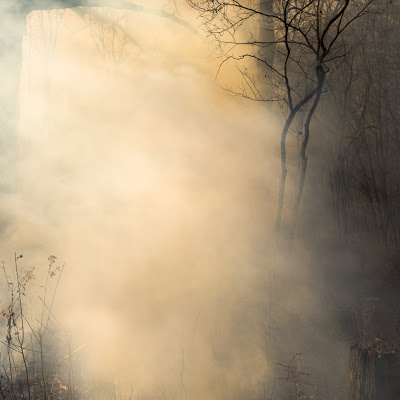
Catching up

It has been a while since I have posted. My apologies to those who check regularly. It is has been a busy and awesome fall. I attended my niece's wedding and it was nothing short of a miracle. All the major players were in attendance, including my parents of 91 and 92 years old. It felt epic and I am reeling from the afterglow.

A few days prior to the wedding I taught a workshop for Filter Photo and totally enjoyed that. I am finding mentoring very fulfilling and am considering opening another critique group this coming winter. I will also continue supporting and encouraging the creative process thru this blog.

Are you familiar with the lyric from the play RENT... "THE OPPOSITE OF WAR ISN'T PEACE, IT'S CREATION." How cool is that? Now get to work creating!

This is an excerpt from Wislawa Szymborska’s Nobel Lecture December 7, 1996....

"I've mentioned inspiration. Contemporary poets answer evasively when asked what it is, and if it actually exists. It's not that they've never known the blessing of this inner impulse. It's just not easy to explain something to someone else that you don't understand yourself. When I'm asked about this on occasion, I hedge the question too. But my answer is this: inspiration is not the exclusive privilege of poets or artists generally. There is, has been, and will always be a certain group of people whom inspiration visits. It's made up of all those who've consciously chosen their calling and do their job with love and imagination. It may include doctors, teachers, gardeners - and I could list a hundred more professions. Their work becomes one continuous adventure as long as they manage to keep discovering new challenges in it. Difficulties and setbacks never quell their curiosity. A swarm of new questions emerges from every problem they solve. Whatever inspiration is, it's born from a continuous "I don't know." ….. This is why I value that little phrase "I don't know" so highly. It's small, but it flies on mighty wings. It expands our lives to include the spaces within us as well as those outer expanses in which our tiny Earth hangs suspended."


and if that were not enough...

“What you are in love with, what seizes your imagination, will affect everything. It will decide what gets you out of bed in the mornings, what you do with your evenings, how you spend your weekends, what you read, who you know, what breaks your heart, and what amazes you. Fall in love, stay in love and it will decide everything.”
Pedro Arrupe

Our Situation on Earth ~ by Albert Einstein

Our Situation on Earth
--by Albert Einstein

"Our situation on this earth seems strange. Every one of us appears here involuntarily and uninvited for a short stay, without knowing the whys and the wherefore. In our daily lives we only feel that man is here for the sake of' others, for those whom we love and for many other beings whose fate is connected with our own. I am often worried at the thought that my life is based to such a large extent on the work of my fellow human beings and I am aware of my great indebtedness to them. I do not believe in freedom of the will. Schopenhauer's words: 'Man can do what he wants, but he cannot will what he wills' accompany me in all situations throughout my life and reconcile me with the actions of others even if they are rather painful to me. This awareness of the lack of freedom of will preserves me from taking too seriously myself and my fellow men as acting and deciding individuals and from losing my temper. [...]

Although I am a typical loner in daily life, my consciousness of belonging to the invisible community of those who strive for truth, beauty, and justice has preserved me from feeling isolated. The most beautiful and deepest experience a man can have is the sense of the mysterious. It is the underlying principle of religion as well as all serious endeavors in art and science. He who never had this experience seems to me, if not dead, then at least blind. To sense that behind anything that can be experienced there is a something that our mind cannot grasp and whose beauty and sublimity reaches us only indirectly and as a feeble reflection, this is religiousness. In this sense I am religious. To me it suffices to wonder at these secrets and to attempt humbly to grasp with my mind a mere image of the lofty structure of all that there is."

--Albert Einstein

Remembering Steve Jobs

'You've got to find what you love,' Jobs says


signage from Apple Store in Oaxaca, Mexico

This is a prepared text of the Commencement address at Stanford Univeristy delivered by Steve Jobs, CEO of Apple Computer and of Pixar Animation Studios, on June 12, 2005.

"I am honored to be with you today at your commencement from one of the finest universities in the world. I never graduated from college. Truth be told, this is the closest I've ever gotten to a college graduation. Today I want to tell you three stories from my life. That's it. No big deal. Just three stories.

The first story is about connecting the dots.

I dropped out of Reed College after the first 6 months, but then stayed around as a drop-in for another 18 months or so before I really quit. So why did I drop out?

It started before I was born. My biological mother was a young, unwed college graduate student, and she decided to put me up for adoption. She felt very strongly that I should be adopted by college graduates, so everything was all set for me to be adopted at birth by a lawyer and his wife. Except that when I popped out they decided at the last minute that they really wanted a girl. So my parents, who were on a waiting list, got a call in the middle of the night asking: "We have an unexpected baby boy; do you want him?" They said: "Of course." My biological mother later found out that my mother had never graduated from college and that my father had never graduated from high school. She refused to sign the final adoption papers. She only relented a few months later when my parents promised that I would someday go to college.

And 17 years later I did go to college. But I naively chose a college that was almost as expensive as Stanford, and all of my working-class parents' savings were being spent on my college tuition. After six months, I couldn't see the value in it. I had no idea what I wanted to do with my life and no idea how college was going to help me figure it out. And here I was spending all of the money my parents had saved their entire life. So I decided to drop out and trust that it would all work out OK. It was pretty scary at the time, but looking back it was one of the best decisions I ever made. The minute I dropped out I could stop taking the required classes that didn't interest me, and begin dropping in on the ones that looked interesting.

It wasn't all romantic. I didn't have a dorm room, so I slept on the floor in friends' rooms, I returned coke bottles for the 5¢ deposits to buy food with, and I would walk the 7 miles across town every Sunday night to get one good meal a week at the Hare Krishna temple. I loved it. And much of what I stumbled into by following my curiosity and intuition turned out to be priceless later on. Let me give you one example:

Reed College at that time offered perhaps the best calligraphy instruction in the country. Throughout the campus every poster, every label on every drawer, was beautifully hand calligraphed. Because I had dropped out and didn't have to take the normal classes, I decided to take a calligraphy class to learn how to do this. I learned about serif and san serif typefaces, about varying the amount of space between different letter combinations, about what makes great typography great. It was beautiful, historical, artistically subtle in a way that science can't capture, and I found it fascinating.

None of this had even a hope of any practical application in my life. But ten years later, when we were designing the first Macintosh computer, it all came back to me. And we designed it all into the Mac. It was the first computer with beautiful typography. If I had never dropped in on that single course in college, the Mac would have never had multiple typefaces or proportionally spaced fonts. And since Windows just copied the Mac, it's likely that no personal computer would have them. If I had never dropped out, I would have never dropped in on this calligraphy class, and personal computers might not have the wonderful typography that they do. Of course it was impossible to connect the dots looking forward when I was in college. But it was very, very clear looking backwards ten years later.

Again, you can't connect the dots looking forward; you can only connect them looking backwards. So you have to trust that the dots will somehow connect in your future. You have to trust in something — your gut, destiny, life, karma, whatever. This approach has never let me down, and it has made all the difference in my life.

My second story is about love and loss.

I was lucky — I found what I loved to do early in life. Woz and I started Apple in my parents garage when I was 20. We worked hard, and in 10 years Apple had grown from just the two of us in a garage into a $2 billion company with over 4000 employees. We had just released our finest creation — the Macintosh — a year earlier, and I had just turned 30. And then I got fired. How can you get fired from a company you started? Well, as Apple grew we hired someone who I thought was very talented to run the company with me, and for the first year or so things went well. But then our visions of the future began to diverge and eventually we had a falling out. When we did, our Board of Directors sided with him. So at 30 I was out. And very publicly out. What had been the focus of my entire adult life was gone, and it was devastating.

I really didn't know what to do for a few months. I felt that I had let the previous generation of entrepreneurs down - that I had dropped the baton as it was being passed to me. I met with David Packard and Bob Noyce and tried to apologize for screwing up so badly. I was a very public failure, and I even thought about running away from the valley. But something slowly began to dawn on me — I still loved what I did. The turn of events at Apple had not changed that one bit. I had been rejected, but I was still in love. And so I decided to start over.

I didn't see it then, but it turned out that getting fired from Apple was the best thing that could have ever happened to me. The heaviness of being successful was replaced by the lightness of being a beginner again, less sure about everything. It freed me to enter one of the most creative periods of my life.

During the next five years, I started a company named NeXT, another company named Pixar, and fell in love with an amazing woman who would become my wife. Pixar went on to create the worlds first computer animated feature film, Toy Story, and is now the most successful animation studio in the world. In a remarkable turn of events, Apple bought NeXT, I returned to Apple, and the technology we developed at NeXT is at the heart of Apple's current renaissance. And Laurene and I have a wonderful family together.

I'm pretty sure none of this would have happened if I hadn't been fired from Apple. It was awful tasting medicine, but I guess the patient needed it. Sometimes life hits you in the head with a brick. Don't lose faith. I'm convinced that the only thing that kept me going was that I loved what I did. You've got to find what you love. And that is as true for your work as it is for your lovers. Your work is going to fill a large part of your life, and the only way to be truly satisfied is to do what you believe is great work. And the only way to do great work is to love what you do. If you haven't found it yet, keep looking. Don't settle. As with all matters of the heart, you'll know when you find it. And, like any great relationship, it just gets better and better as the years roll on. So keep looking until you find it. Don't settle.

My third story is about death.

When I was 17, I read a quote that went something like: "If you live each day as if it was your last, someday you'll most certainly be right." It made an impression on me, and since then, for the past 33 years, I have looked in the mirror every morning and asked myself: "If today were the last day of my life, would I want to do what I am about to do today?" And whenever the answer has been "No" for too many days in a row, I know I need to change something.

Remembering that I'll be dead soon is the most important tool I've ever encountered to help me make the big choices in life. Because almost everything — all external expectations, all pride, all fear of embarrassment or failure - these things just fall away in the face of death, leaving only what is truly important. Remembering that you are going to die is the best way I know to avoid the trap of thinking you have something to lose. You are already naked. There is no reason not to follow your heart.

About a year ago I was diagnosed with cancer. I had a scan at 7:30 in the morning, and it clearly showed a tumor on my pancreas. I didn't even know what a pancreas was. The doctors told me this was almost certainly a type of cancer that is incurable, and that I should expect to live no longer than three to six months. My doctor advised me to go home and get my affairs in order, which is doctor's code for prepare to die. It means to try to tell your kids everything you thought you'd have the next 10 years to tell them in just a few months. It means to make sure everything is buttoned up so that it will be as easy as possible for your family. It means to say your goodbyes.

I lived with that diagnosis all day. Later that evening I had a biopsy, where they stuck an endoscope down my throat, through my stomach and into my intestines, put a needle into my pancreas and got a few cells from the tumor. I was sedated, but my wife, who was there, told me that when they viewed the cells under a microscope the doctors started crying because it turned out to be a very rare form of pancreatic cancer that is curable with surgery. I had the surgery and I'm fine now.

This was the closest I've been to facing death, and I hope it's the closest I get for a few more decades. Having lived through it, I can now say this to you with a bit more certainty than when death was a useful but purely intellectual concept:

No one wants to die. Even people who want to go to heaven don't want to die to get there. And yet death is the destination we all share. No one has ever escaped it. And that is as it should be, because Death is very likely the single best invention of Life. It is Life's change agent. It clears out the old to make way for the new. Right now the new is you, but someday not too long from now, you will gradually become the old and be cleared away. Sorry to be so dramatic, but it is quite true.

Your time is limited, so don't waste it living someone else's life. Don't be trapped by dogma — which is living with the results of other people's thinking. Don't let the noise of others' opinions drown out your own inner voice. And most important, have the courage to follow your heart and intuition. They somehow already know what you truly want to become. Everything else is secondary.

When I was young, there was an amazing publication called The Whole Earth Catalog, which was one of the bibles of my generation. It was created by a fellow named Stewart Brand not far from here in Menlo Park, and he brought it to life with his poetic touch. This was in the late 1960's, before personal computers and desktop publishing, so it was all made with typewriters, scissors, and polaroid cameras. It was sort of like Google in paperback form, 35 years before Google came along: it was idealistic, and overflowing with neat tools and great notions.

Stewart and his team put out several issues of The Whole Earth Catalog, and then when it had run its course, they put out a final issue. It was the mid-1970s, and I was your age. On the back cover of their final issue was a photograph of an early morning country road, the kind you might find yourself hitchhiking on if you were so adventurous. Beneath it were the words: "Stay Hungry. Stay Foolish." It was their farewell message as they signed off. Stay Hungry. Stay Foolish. And I have always wished that for myself. And now, as you graduate to begin anew, I wish that for you.

Stay Hungry. Stay Foolish.

Thank you all very much."

Few people come around with such a clear vision. His convictions, love and creativity have changed how we operate in this world. He will be greatly missed.

David Maisel ~ History's Shadow

I decided to repost this entry as there was a wonderful article about David's work in the New York Times yesterday titled The Heart of the Art. His work continues to amaze me it is depth, originality and metaphorical references. There is a slide show where you can view his work here.

Here is the post from November 2009...

David Maisel has once again pushed the boundaries of photography while exploring memory and excavation. While at a residency at the Getty Research Institute, he states that he began exploring "where the realms of art and scientific research overlap each other. While photographing the Getty Museum’s conservation departments, I became captivated by x-rays of art objects from the museum’s permanent collections. The ghostly images of these x-rays seem to surpass the power of the original objects of art. These spectral renderings seemed like transmissions from the distant past, conveying messages across time."


"History’s Shadow comprises my series of re-photographed x-rays of art objects from antiquity. I have culled these x-rays from museum archives, which utilize them for conservation purposes. Through the x-ray process, the artworks of origin become de-familiarized and de-contextualized, yet acutely alive and renewed."


"I view these x-rays as expressions of the artists and artisans who created the original objects, however many centuries ago; as vestiges and indicators of the societies that produced these works; and as communications from the past, expressing immutable qualities that somehow remain constant over time."


For those of you who are not familiar with David's work, it is well worth your time to visit his website. He has done some amazing work, including his Mining Project and his Library of Dust series


“. . . these canisters hold the cremated remains of patients from an American psychiatric hospital. Oddly reminiscent of bullet casings, the canisters are literal gravesites. Reacting with their ash inhabitants, the canisters are now blooming with secondary minerals, articulating new metallic landscapes.”

— Geoff Manaugh, Contemporary

Peace ~ ful

You haven't heard from me lately because I just returned from a retreat at the Omega Institute in upstate NY where I once again met with the Brazilian healer John of God. I had seen him in Abadiania, Brazil last January for a most amazing experience (see former post HERE). This encounter was definitely different...no sacred waterfalls and no one to translate your individual questions among many other things. However, it was enriching in many other ways including being able to understand the guided meditations which, in Brazil, were all in Portuguese!
I was thrilled with the use of rainbow imagery in one guided meditation. My thoughts went immediately to my former post and to a much deeper understanding of chakras (which are referred to often in yoga practice).

©Mexico 2011 Jane Fulton Alt

By day three I found myself in a place of deep inner peace, contentment and serenity. It was so lovely to drink from the well once again.

I am in the throws of trying to incorporate the calm and peace I experienced last week into my everyday life. This has been aided by reading the New York Times bestseller, hamlet's Blackberry by William Powers. It was recommended to me in the comments section of an earlier post On Blogging by fellow photographer, Paul, whose blog, The Bertie Project, is well worth visiting. The book is a very thoughtful and balanced discussion on balancing online activities with the creative life. "The essential idea of the book is simple : to lead happy productive lives in a connected world as we need to master the art of disconnecting....Humans love to journey outward. The connective impulse is central to who we are. But it's the return trip, back to the self and the life around us, that gives our screen time value and meaning."

Quieting of the mind is essential to the creative life.

Pae White at the Art Institute of Chicago

I feel like I should be working for the tourism board of the City of Chicago. There are so many cool goings on in the city.
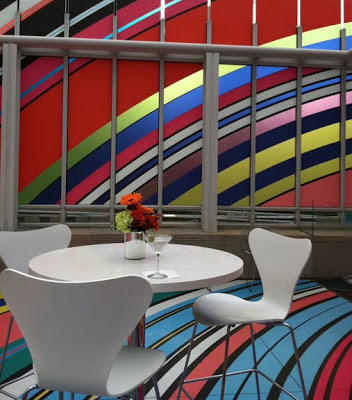
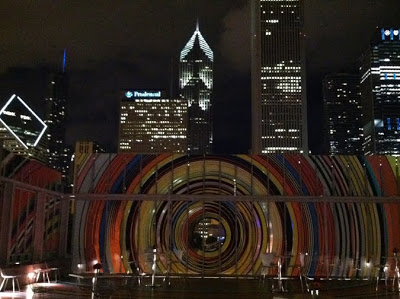
Last night I attended an event at the new Modern Wing of the Art Institute of Chicago. I had never been to the restaurant, Terzo Piano, and the setting took my breath away. The terrace, with spectacular views of Millennium Park and Michigan Avenue, is encased with a site specific work by artist Pae White titled Restless Rainbow. She has wrapped the space with an abstracted rainbow. While planning for the installation, White wondered... what would happen if a rainbow fell from the sky?

You could go see for yourself.


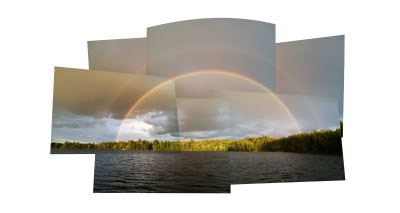
While we are on the subject of rainbows, here is a stitched iphone photograph of a double rainbow.

© Alden Griffith


Who even knew they occurred in nature?

Chicago Theater ~ On Rothko and The Pitmen Painters

Everyone knows how fabulous Chicago Theater is. There is always something wonderful to see. I am passing along 2 suggestions for anyone reading this blog who resides in Chicago. The Pitmen Painters at Time Line Theater is about a group of men who work in the coal mines who hire a teacher so they can learn about art. When the teacher learns they know absolutely nothing about the history of art, he suggests they pick up a paintbrush and start creating their own art. What follows is an insightful and delightful discussion about art.

I jotted down these quotes to share...

"Art isn't about finding answers...it's about asking questions."
"Art is not about technical proficiency, it is about feelings."

A nice article about the book that the play was based on, The Pitman Painters: The Ashington Group 1934-1984 by William Feaver is HERE.


Last night I saw Red at the Goodman Theater which is by American writer John Logan about artist Mark Rothko. I was deeply moved by the play as it touched so many of the themes in my life. Happily, I bought a copy of the play in the lobby to more fully consider it's riches. One thing Rothko asks his assistant was if he had every read Nietzsche's The Birth of Tragedy. (I haven't but just downloaded it onto my kindle).


He goes on to discuss his concern for building up the luminosity of the painting, (something I am currently struggling with and am at the point of being discouraged but not defeated). "I do a lot of layers, one after another, like a glaze, slowly building the image, like pentimento, letting the luminescence emerge, until it's done."

The Rothko character also states, "These pictures deserve compassion and they live or die in the eye of the sensitive viewer, they quicken only if the empathetic viewer will let them. That is what they cry out for. That is why they were created. That is what they deserve."

For more information on the NYC production, there is an online interview with Charlie Rose HERE.

Thursday Morning Musings

"We shall not cease from our exploration
And at the end of all our exploring
Will be to arrive where we started
And know the place for the first time." T. S. Eliot

I thought of this poem this morning as I was listening to the Grateful Dead. It was if I had never really heard the music before.
Amazing how we often gloss over things that we "think" are so familiar. I keep wondering how to keep my mind and heart open to the infinite world of possibilities.

This was a self portrait I did years ago in the darkroom by sandwiching negatives together....I look at it now and think "did I really do that?"

Gregory Crewdson

I have been aware of Gregroy Crewdson's work for some time now but just recently read on twitter that he will be teaching at Yale University in their photography department. It peaked my interest in him so I decided share some of his work.

Crewdson is best known for elaborately staged scenes of American homes and neighborhoods and often has up to 40 crew members helping him to create that perfect shot. There is an interview I found on you tube where he describes his process, which I am including at the bottom of this post. I am also including a few quotes from the interview which I found inspiring.

"What is important is trying to make this one moment as beautiful and mysterious as possible."


"In a lot of my pictures there is a preoccupation with what is beneath the surface of something."


"There is a tension between the ordinary and the strange that really attracts me."


"I like the twilight, the magic hour, but I think my pictures are very much about the moment between moments, between before and between after."

Here is the interview. What is amazing to me is the effort involved in creating the photograph. It is staggering.

Marwencol

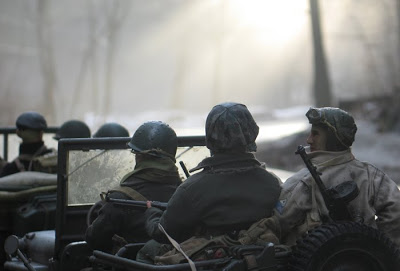
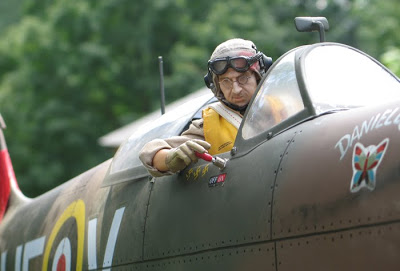
If you ever wondered how art factors into mental health and healing, you have to check out this movie, Marwencol. It is the riveting story of how Mark Hogancamp overcame a vicious mugging that left him severely impaired with extensive brain damage. It is remarkable how the photographs he took of his work conveyed the deep emotion and drama of the scene. There is a fusion of what is real and what is imagined which gives the work an immediacy and extraordinary power. The filmmakers of this documentary were also masterful in how they told the story.


You can stream the movie thru Netflix. Also, Marwencol is the name of his imaginary town. You can learn more about the entire project HERE.

The Dorchester Project ~ Theaster Gates

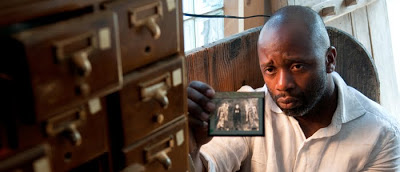
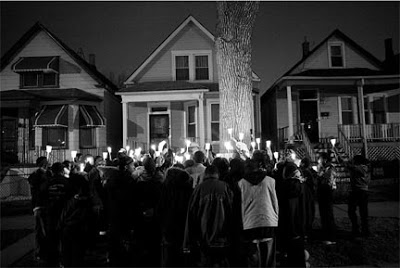
I don't know if you have seen the movie the Interrupters, but if you did, it may have left you wondering what you could do. The arts have always been a vehicle for healing. I just read this article in the University of Chicago Magazine and instead of trying to paraphrase it, I thought I would just share it. The project is truly inspired and reminds me of how some artists have transformed Detroit neighborhoods.

Culture Wares
BY JEFF CARROLL | PRINT EDITION—SEPT–OCT/2011

Theaster Gates hopes to transform a neighborhood through art.

It's as if he wants to get this part out of the way first: Theaster Gates knows that the South Side of Chicago has long been burdened with a bad reputation—and that the reputation is at least partially merited. "We know there's violence, and we know there's gang activity," Gates says. "We know there's not a strong economic core."

What Gates most wants to talk about, however, is the potential that gets lost in the discussions of the problems. "What we don't consider enough is the rich cultural legacy," Gates says, "the kind of cultural curiosity, the alternative histories. ... There is a deep intellectual reservoir that has never been fully tapped. And if it has, its voice has never been amplified loudly enough."

© Lloyd Degrane

Gates, a University resident artist, visual-arts lecturer, and director of arts-program development, has dedicated himself to amplifying that voice.

His Dorchester Project is the most ambitious example of his goal to find run-down spaces in struggling black neighborhoods and transform them through art and culture. Although the South Side's Grand Crossing neighborhood serves as the locus of his movement, Gates's art has been the subject of exhibitions in other cities, including St. Louis and Seattle. He has purchased property in St. Louis with the idea of transforming blighted spaces there, as well.

Gates, a West Side native who has arts, religion, and urban planning degrees from Iowa State University, has accumulated an eclectic body of work from pottery to music—his Black Monks of Mississippi ensemble includes musician Leroy Bach, formerly of the alt-rock band Wilco. The ongoing project in Grand Crossing, however, promises to be his magnum opus.

The Dorchester Project's centerpiece is a once-abandoned two-story house at 6916 South Dorchester. To create what he hopes will become a South Side cultural hub, where artists and other visitors can congregate both informally and for planned events, Gates went on a bargain spending spree. He purchased the property for $16,000. Then he bought 8,000 vinyl albums from a Hyde Park record store, Dr. Wax, which was closing. He added to the mix approximately 14,000 used books and thousands of photographic slides that the University of Chicago was planning to discard. Every item serves a double purpose—arrayed throughout the home, each one becomes part of the overall decor while also providing cultural material for artists and other visitors, a conversation piece unto itself.
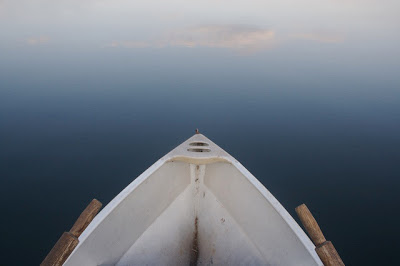
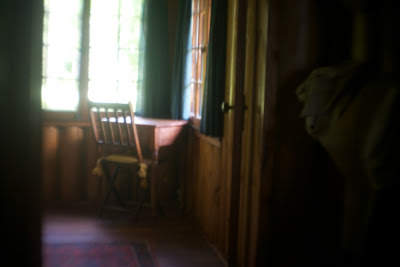
The house is the first of many spaces on the block that Gates, who has also purchased two vacated foreclosures nearby, plans to transform. For stigmatized neighborhoods, he says, art can be the springboard to renaissance. "There's dignity everywhere," Gates says. "It's easy to overlook because the people who write about culture in the city live north. The people who have the capacity to create new cultural opportunities usually create them in a place that seems economically viable, where you can bank on a certain kind of person going to a certain kind of thing."

For Gates, who joined the University in 2007, his job is an opportunity to bridge the gap between the campus arts culture and the surrounding neighborhoods. He intends to connect the two even more, developing a role with the University under the working title, "Director of Arts and Public Life."

"I'm having this conversation with my friends at the University of Chicago," says Gates. "How can our students become more cultured? How do we get our students more embedded in the cultural life of the city? How do we ensure that our students have a voice and are engaged in the community? ... How do we make sure the community has access to the cultural life of the University? ... Is there a way I can help contribute to that?"
With his Dorchester Project, Gates is leading the discussion.

The link to the article is HERE.

Waste Landscape ~ Elise Morin and Clemence Eliard

WASTE LANDSCAPE - Centquatre 104 - 21-07 // 11-09-2011 from elise morin on Vimeo.


A project by Elise Morin and Clémence Eliard

"WasteLandscape" is a 500 square meters artificial undulating landscape covered by an armor of 65 000 unsold or collected CDs, which have been sorted and hand-sewn. It is well known that CDs are condemned to gradually disappear from our daily life, and to later participate in the construction of immense open-air, floating or buried toxic waste reception centers.Made of petroleum, this reflecting slick of CDs forms a still sea of metallic dunes: the art work's monumental scale reveals the precious aspect of a small daily object. The project joins a global, innovative and committed approach, from its means of production until the end of its "life"."WasteLandscape" will be displayed in locations coherent with the stakes of the project: art role in society, raising consciousness to environmental problems through culture, alternative mode of production and valuation of district associative work and professional rehabilitation. Over the course of multiple exhibitions, "WasteLandscape" will go through quite a few transformations before being entirely recycled into polycarbonate. The roaming will allow both artists to pursue new awareness-raising activities.

"The installation has been developped by Elise Morin and Clémence Eliard in collaboration with the 104"
"The building has been refurbished by atelier Novembre: Marc Iseppi & Jacques pajot"

In Memory of 9/11 ~ Quelling the Violence

It was unintentional but on the eve of the 10th anniversary of 9/11 I went to see the movie The Interrupters. I had been trying to seeing it for some time but it took a while to open in Chicago and then I was out of town for all the sold out record breaking performances at the Gene Siskel Film Center. I was pleased to see they had another short run in a theater near me. I have been tracking this movie for some time because I had at one time considered working on a photographic project on gun violence. At the time of doing the research, I learned of this film in the making. I was so pleased that the extraordinary filmmakers, Kartemquin, of Hoop Dreams, were tackling the issue. The film focuses on universal themes of hope, compassion and love while following people in a south side Chicago neighborhood as they interrupt the cycle of violence. The model of intervention that the program Cease Fire uses could be applied world wide. The film has won multiple awards and should not be missed. Please, please, please go see it. You won't be disappointed.


Another person tackling the subject of epidemic gun violence is photographer extraordinaire, Carlos Javier Ortiz. He is giving a lecture about his work at the Filter Photo Festival in Chicago on Wednesday, October 12th at 7pm. Make your reservation HERE.

© Carlos Javier Ortiz

© Carlos Javier Ortiz

On Blogging

I have been thinking about my blog as of late, and have decided to post only "when the spirit moves me". I am thus abandoning my photo of the day project which I enjoyed for the first several months but has recently felt more burdensome. I continue to think of this blog as a place where I can share information that will inspire and support the creative life (with some self promotion on the side).

I have been reflecting on the state of photography in relationship to the internet and to my life. It has been amazing to me how much networking is done thru the internet and how much time we all spend trying to "connect" and be seen. Having been away from it for several weeks was truly refreshing. I wish I could say I have a definite answer for how to navigate all the social networking and informational sites but I don't and am stuggling to find the fine balance myself.

What I do know is that being in the state of creating is where it is at. The is what I value most.


On another note, there are several things happening in the Chicago area you should know about. The first is that this weekend is the fall opening of many exhibitions. It is a great time to see art and be inspired. There will be free trolleys running tonight in Chicago to get people to the various gallery districts. Should be a fun time. For more information, click HERE.

Tomorrow night is the opening for Christopher Schneberger and Anthony Iacussi at the Perspective Gallery in Evanston. Another great venue of a cooperative artist run gallery. Click HERE for more information.

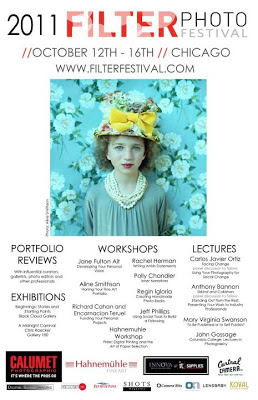
The Filter Photo Festival is fast approaching and is offering a wealth of information and networking opportunities for photographers. Again, I will be teaching a workshop on Developing your Personal Vision on Wednesday, October 12th. Be sure to check out the wonderful lectures portfolio reviewers who are coming into our windy city.

And finally, if you love to read and have some extra cash and would like to support the place where so many wonderful books are written, the Ragdale Foundation is having their annual Novel Affair fundraiser at the end of the month. You can read more about it HERE. The 2 night affair includes having a dinner with a best-selling and award-winning authors including Lisa Genova (Still Alice), Ron Hansen (The Assassination of Jesse James by the Coward Robert Ford), Helen Simonson (Major Pettigrew’s Last Stand), Meg Wolitzer (The Position), Suzzy Roche (singer and new author), Heidi Durrow (The Girl Who Fell from the Sky), Sue Miller (The Good Mother), and Malachy McCourt (author and actor).

Checking In

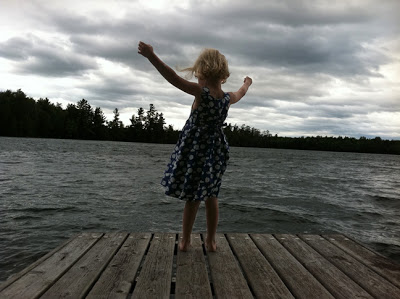
I woke up this morning to an email from Yvette stating how she was looking forward to my updated posts. I must say that I have been thinking about this blog and how much I enjoyed taking a break from writing. However, with her nudge, I decided to share a photograph I took that really pleased me from my time in Northern Wisconsin. I was considering how we, as photographers, tend to be drawn to the same image over and over again. After I took this photograph with my iphone, I was immediately reminded of an earlier image from the 1990's.


I poked around in my storage boxes and found the "matching" image. This earlier one was a "constructed" image which I set up (as opposed to the one I took this summer). I had such a difficult time in the darkroom dodging the sheet so I just made another print and tried the cut and paste method! Needless to say, this is the very first time this print has seen the light of day.


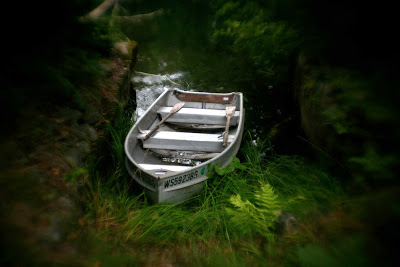
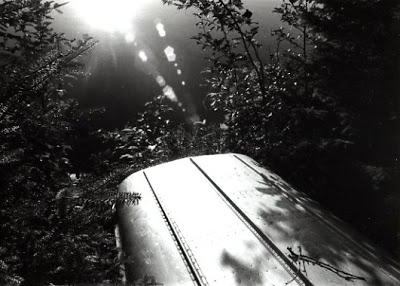
And then there is the quintessential boat. I have photographed this boat every summer and find it endlessly fascinating in its character and poetic possibilities.


In thinking about the change of seasons, our comings and goings, I thought I would share an amazing poem by Mark Strand...

From Dark Harbor

"It is true, as someone has said, that in
a world without heaven all is farewell.
Whether you wave your hand or not,

It is farewell, and if no tears come to your eyes
It is still farewell, and if you pretend not to notice,
Hating what passes, it is still farewell.

Farewell no matter what. And the palms as they lean
Over the green, bright lagoon, and the pelicans
Diving, and the glistening bodies of bathers resting,

Are stages in an ultimate stillness, and the movement
Of sand, and of wind, and the secret moves of the body
Are part of the same, a simplicity that turns being

Into an occasion for mourning, or into an occasion
Worth celebrating, for what else does one do,
Feeling the weight of the pelicans' wings,

The density of the palms' shadows, the cells that darken
The backs of bathers? These are beyond the distortions
Of chance, beyond the evasions of music. The end

Is enacted again and again. And we feel it
In the temptations of sleep, in the moon's ripening,
In the wine as it waits in the glass."

--Mark Strand


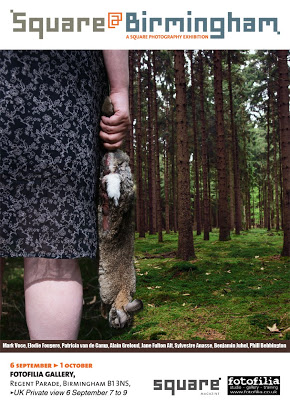
Square@Birmingham Exhibition


An exhibition of square goodness will take place at fotofilia gallery, Regent Parade, Birmingham B1 3NS, UK, from 6th Sept to 1st Oct. Private view on the 6th Sept, 7 till 9 featuring works from: Mark Voce, Elodie Fougere, Patricia van de Camp, Alain Greloud, Jane Fulton Alt, Sylvestre Anasse, Olivier Despicht, Benjamin Juhel et Phil Bebbington.

It promises to be a very interesting exhibition. Wish I could be there!