excerpts from "What Is Art?" by Leo Tolstoy

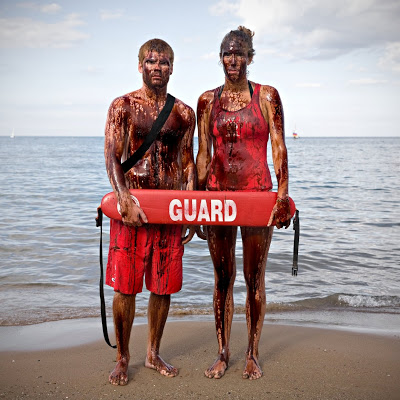
In response to all the internet discussion surrounding Crude Awakening...

"Art begins when one person, with the object of joining another or others to himself in one and the same feeling, expresses that feeling by certain external indications. To take the simplest example: a boy, having experienced, let us say, fear on encountering a wolf, relates that encounter; and, in order to evoke in others the feeling he has experienced, describes himself, his condition before the encounter, the surroundings, the woods, his own lightheartedness, and then the wolf's appearance, its movements, the distance between himself and the wolf, etc. All this, if only the boy, when telling the story, again experiences the feelings he had lived through and infects the hearers and compels them to feel what the narrator had experienced is art. If even the boy had not seen a wolf but had frequently been afraid of one, and if, wishing to evoke in others the fear he had felt, he invented an encounter with a wolf and recounted it so as to make his hearers share the feelings he experienced when he feared the world, that also would be art. And just in the same way it is art if a man, having experienced either the fear of suffering or the attraction of enjoyment (whether in reality or in imagination) expresses these feelings on canvas or in marble so that others are infected by them. And it is also art if a man feels or imagines to himself feelings of delight, gladness, sorrow, despair, courage, or despondency and the transition from one to another of these feelings, and expresses these feelings by sounds so that the hearers are infected by them and experience them as they were experienced by the composer.

And it is upon this capacity of man to receive another man's expression of feeling and experience those feelings himself, that the activity of art is based.

The stronger the infection, the better is the art as art, speaking now apart from its subject matter, i.e., not considering the quality of the feelings it transmits.

I have mentioned three conditions of contagiousness in art, but they may be all summed up into one, the last, sincerity, i.e., that the artist should be impelled by an inner need to express his feeling. That condition includes the first; for if the artist is sincere he will express the feeling as he experienced it. And as each man is different from everyone else, his feeling will be individual for everyone else; and the more individual it is - the more the artist has drawn it from the depths of his nature - the more sympathetic and sincere will it be. And this same sincerity will impel the artist to find a clear expression of the feeling which he wishes to transmit."

Thank you, Dick, for sharing this essay so many years ago...
(This essay (originally published in 1896) and the translation by Alymer Maude (first published in 1899) are in the public domain and may be freely reproduced.)

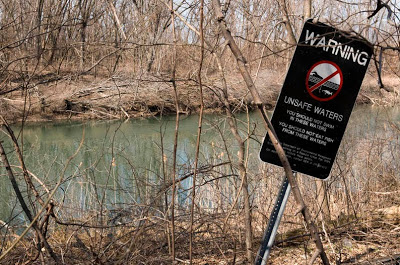
BP in Whiting Indiana ~ Photographs by Lloyd Degrane

In 2007 there was a big uproar about BP dumping ammonia and industrial sludge into Lake Michigan. A Chicago Tribune article, BP Gets Break on Dumping in Lake, spelled out what was happening. A fellow photographer, Lloyd Degrane, has been photographing in Whiting, Indiana for some time now.

© Lloyd Degrane

Here is what he says....
"I've been working on a documentary project for a few years now and took these along the shore and nearby industrial sites of Lake Michigan. The Whiting,In. BP Refinery is only 15 miles from downtown Chicago. Up until the Gulf oil spill the Indiana refinery was surging ahead with their planned 100% expansion that would allow for the refinement of Canadian Tar Sands. The Tar Sands project starts in Alberta Canada. There, it's roughly refined and then would be shipped to Whiting for final refinement, right on the Lake Michigan shoreline. Tar sands oil is the dirtiest oil on the planet. It also requires a huge amount of energy to process. The one good thing about the Gulf oil disaster is that the Tar Sands project has been put on hold."

© Lloyd Degrane

BP and where I live

Just got an email this morning from Ben Prisk who lives in Ocean Springs, MS. The following is a post from his blog.

"I ran across the image below tonight at Boingboing. It was done by photographer Jane Fulton (look at the rest of her work please).

Currently, our barrier islands are doing a fair job of keeping the oil at bay. Growing up, I used to hate those islands, because they kept our water from being a brilliant green (as it was when you sailed to those islands). Now those islands are covered in the oil that all the other states are encountering.

I've held a bag of that oil....it has the weight and consistency of molten liver. I've talked to the men trying to skim it. When the oil splashes onto the boats, it takes an acidic cleaner and a lot of 'elbow grease' to remove it (hours).

I spoke to a friend of mine who owns a gorgeous wooden boat that BP tried to hire....he looked at the fine print in the contract and it said that 'all wooden boats would have to be destroyed after the event'. He declined, as his 52 ft boat was built in 1939 by a 19th century local boat builder wiped out by Katrina.

Thanks barrier islands.

If I were a wealthy man, I would license her images from her, have them printed in bus-stop size format and have them placed along the coast.... no logos ... no words ... only a tiny photo credit. Her work says it all."

© 2010 Jane Fulton Alt ~ Keith, Laura and Olivia

back from Mexico City

Just returned from a 4 day staff trip with Rick Bayless & company....and some company it was! The people who work at Frontera Grill/ Toplobampo/Xoco are amazing in their passion, dedication and curiosity of all things Mexican. I am overwhelmed with all that I was exposed to.


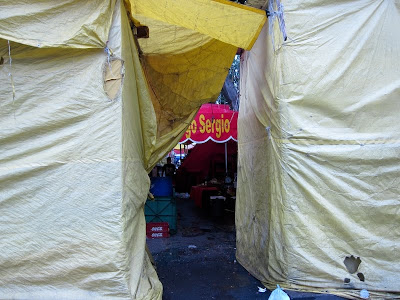
The main food market in Mexico City , La Merced Market, is one of the biggest on the planet. Driving there was a challenge. What was normally supposed to take 10 minutes of travel time took a full hour, so we had to literally race thru the market as many stalls were closing down. We were instructed by Rick to stay close and follow. It was a great photographic experience for me as there was NO THINKING time, just reacting.


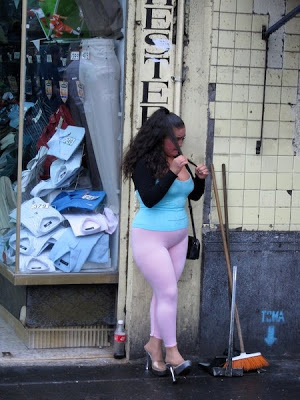
The market area is also known for flagrant prostitution in which women can be seen soliciting at all hours of the day and night.
Merced is considered to be a “tolerance zone” for prostitution, meaning that police generally do not intervene. Prostitution exists in just about all parts of Mexico City but it is most obvious here.


more to follow....

Calling for the Pelicans

© 2010 Jane Fulton Alt ~ Itay

"As I was watching the world cup on TV, a commercial from BP came on with a phone number to make a claim for anyone that has been harmed by the effects of the recent oil spill. The commercial went on and on about how BP is trying to make things right by replacing the lost livelihoods of fishermen and others living on the Gulf Coast, but I couldn't help but wonder what would happen if I called in and made a claim...as a pelican. I've come to realize how people are so concerned with the safety of the oil rig workers or how the fishing industry in the Gulf is in ruins, but what about the pelicans? What about the environmental repercussions that the oil spill has caused? I think that when man makes mistakes that cause himself problems, that is own business, but when our thirst for oil disturbs the processes of nature, we are responsible for the damage. The horrifying images of pelicans struggling to get out of the water, drenched in oil, are constant reminders of the severity of the environmental crisis in the Gulf Coast. I'm calling BP to make a claim for the pelicans, because they've been affected by the spill as much as anyone, although they don't want a check in the mail. All they want is to have the water where they feed and live to be free of fossil fuels so they can go about their business. They can't do it themselves, and it is up to us to make a difference throughout this environmental catastrophe. I'm calling for the pelicans."

Itay ~ age 16

US Could Learn Plenty from European Energy Policy

updates on Crude Awakening

One of the benefits of having attending the BP protest in Chicago a few weeks ago was meeting Thomas Frank and his family.
Thomas is an artist and has been living under the shadow of the BP plant in East Chicago, Indiana for some time. He has a blog, http://blog.thomasfrank.org/ with incredible information on it. When I contacted him earlier in the week he was "in Detroit at the U.S Social Forum working on a response to the TAR SANDS, another horrible no good disaster BP is deeply involved in." Please check his blog out.

© 2010 Jane Fulton Alt ~ Marissa, Maya and Noa

I also received a link from a friend, Lapham's Quarterly essay on Henry David Thoreua's Walden Pond:Living Deliberately which has much relevance to our world today.

from PBS NEWSHOUR Rundown

I am currently working on getting a Crude Awakening You Tube video posted. Stay tuned. Again, all my work up to date can be seen HERE.

More on Crude Awakening and the Environment

In response to a comment in the last blog, I thought I would post more about the Crude Awakening project.

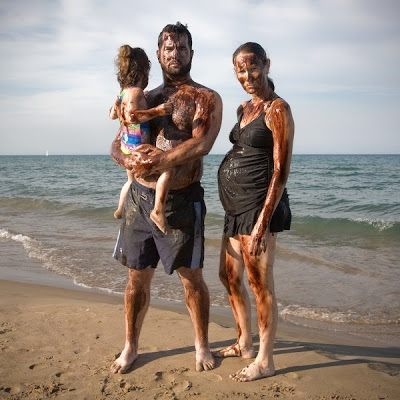
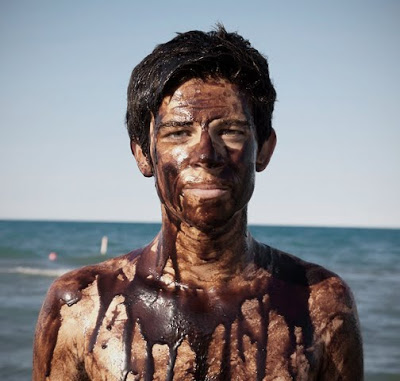
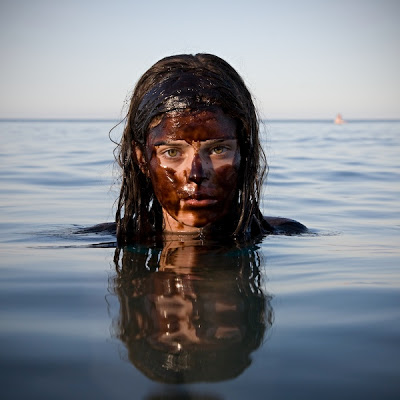
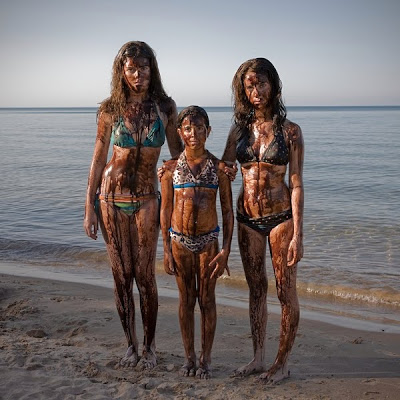
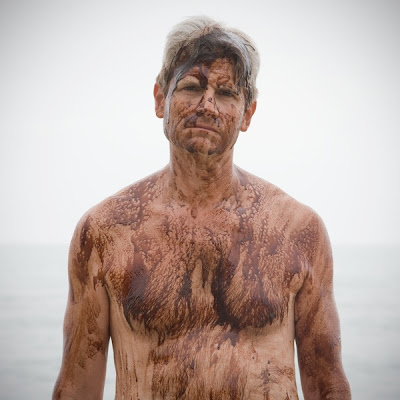
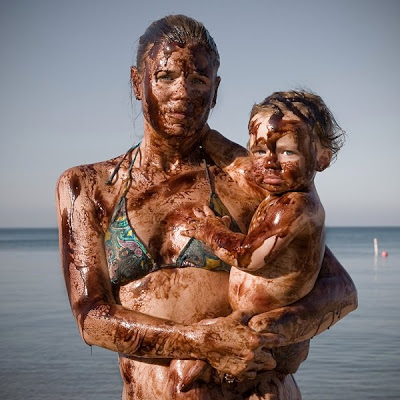
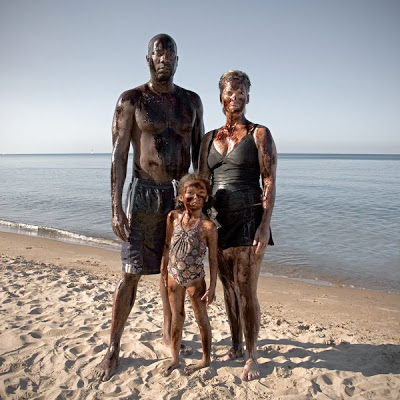
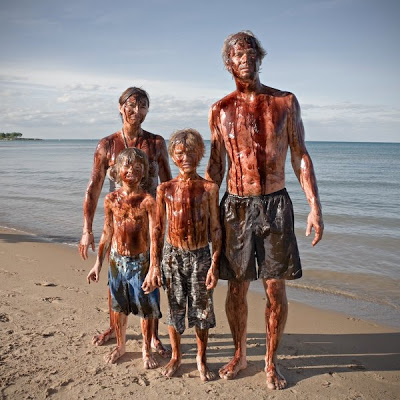
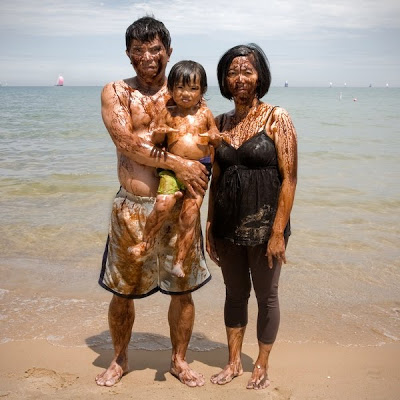
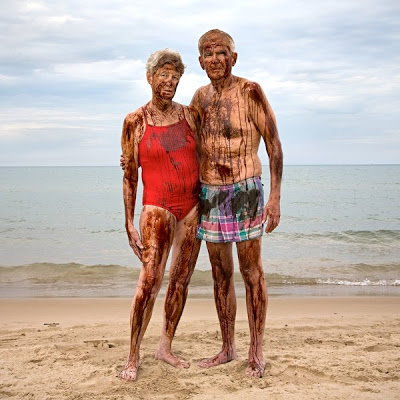
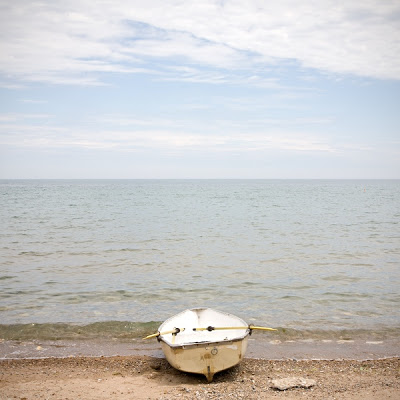
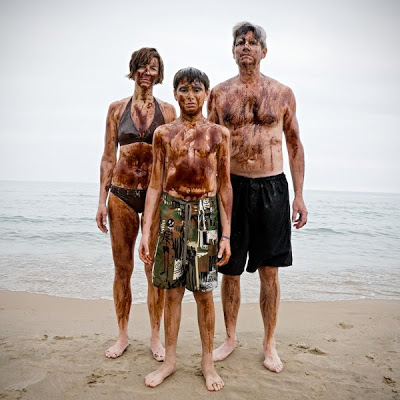
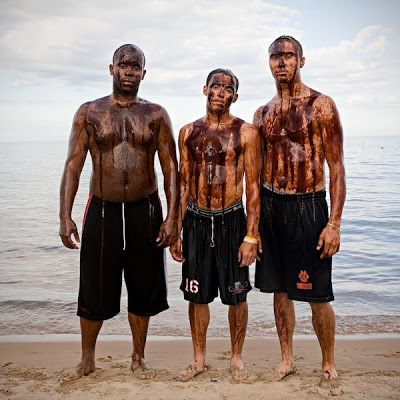
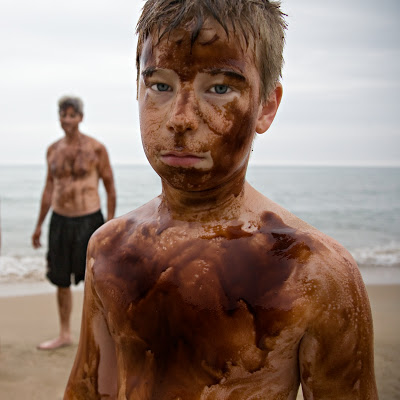
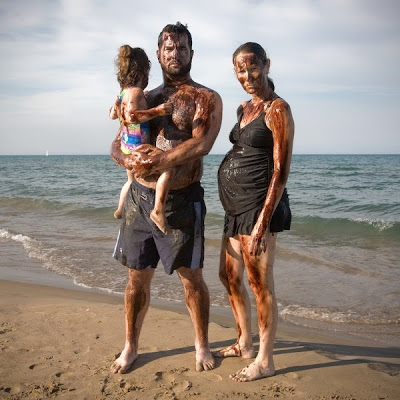
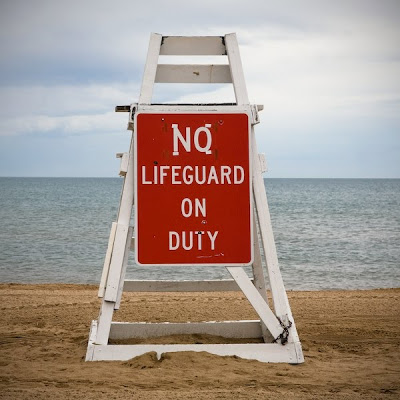
The work is conceptual in nature as I live on the shores of Lake Michigan and the images were all taken here. Its conception took form the day before the much anticipated beaches opened for the 2010 swimming season. It was impossible to ignore what was happening to the shore lines in the Gulf of Mexico as our beaches opened to pristine conditions.

I initially thought no one would voluntarily want oil poured on them so tried to simulate it in photoshop. It was a disaster and I figured my project was dead.

Then I went to a BP protest in Chicago on June 11th and asked someone there if they would consider modeling with oil. I was shocked when the answer was yes. We quickly came up with other substances that might substitute for the oil. As I asked around, many people said they would be happy to help out. When on location and photographing, many people asked to be included in the project. The concern for our environment and saftey is widely shared.

The seeds if the project were born June 4th and the shooting began June 13th. It has been a whirlwind.

© 2010 Jane Fulton Alt ~ George

I just received a letter from a writer friend who is in Europe for the year, John Bell.
He writes:

As we travel around Europe, mostly by train, we see hundreds of windmills. Denmark has installed them in the sea. The Netherlands and other coastal countries) are developing energy sources from waves and tides. Germany has developed a major industry in solar cells for home and business. I'm a bit more ambivalent about so much nuclear power, but here it doesn't seem to be built by whoever submitted the lowest bid. Berlin has few traffic problems because so many people bike and take public transportation. Besides, it seems that every other car is a SmartCar. In Amsterdam almost everyone bikes, and the tram system is wonderful. Madrid has the cleanest and most efficient Metro I've seen, and it only cost riders 1 Euro per trip.

I guess what I'm sharing is that Europe seems to have awakened far ahead of us.

Start writing your congressmen!
again, the project (up to the moment) can be seen HERE.

update on Crude Awakening

Here are some new images from my Crude Awakening portfolio. Thanks to all who so generously offered to be part of this project.

© 2010 Jane Fulton Alt ~ Faris, Afrah, Maryam, Akir and Ayaaz

© 2010 Jane Fulton Alt ~ Slanek, Alina Oscar and Oliver

© 2010 Jane Fulton Alt ~ Richele,Bernard,and Julia


© 2010 Jane Fulton Alt ~ Jean and Jordan


© 2010 Jane Fulton Alt ~ Life Boat

The full set can be viewed on my website HERE. More images will be added.

Crude Awakening

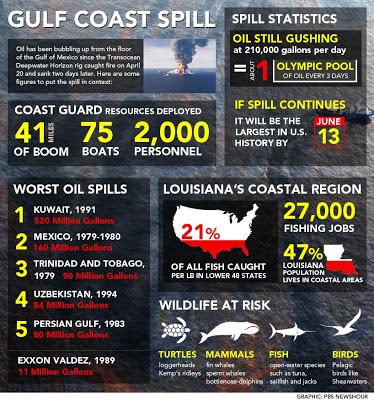
Living on the shores of Lake Michigan, I am acutely aware of the disastrous toll the oil spill in the Gulf of Mexico has taken on all forms of life, especially as our beaches opened to the 2010 swimming season. This environmental, social and economic catastrophe highlights a much larger problem that has inflicted untold suffering as we exploit the earth’s resources worldwide.

We are all responsible for leading lives that create demand for unsustainable energy.
We are also all responsible for the solution and we must work together to protect the balance of life.

© 2010 Jane Fulton Alt ~ Andrea, George and Taylor

©2010 Jane Fulton Alt ~ Three Friends

©2010 Jane Fulton Alt ~ Ben

© 2010 Jane Fulton Alt ~ Keith, Laura and Olivia

©2010 Jane Fulton Alt ~ Life Guards


This is what I have been working on this past week...

I would like to photograph families of all different nationalities. If you know of such families that would be interested, please contact me asap. I will be posting new work as it gets created.

©2010 Jane Fulton Alt ~ No Life Guard on Duty

The up to date set of images can be viewed on my website HERE.

In Case you missed Thomas Friedman's Op-Ed

an excerpt from This Time is Different, published June 11, 2010 in the New York Times

"My friend, Mark Mykleby, who works in the Pentagon, shared with me this personal letter to the editor he got published last week in his hometown paper, The Beaufort Gazette in South Carolina....

“I’d like to join in on the blame game that has come to define our national approach to the ongoing environmental disaster in the Gulf of Mexico. This isn’t BP’s or Transocean’s fault. It’s not the government’s fault. It’s my fault. I’m the one to blame and I’m sorry. It’s my fault because I haven’t digested the world’s in-your-face hints that maybe I ought to think about the future and change the unsustainable way I live my life. If the geopolitical, economic, and technological shifts of the 1990s didn’t do it; if the terrorist attacks of Sept. 11 didn’t do it; if the current economic crisis didn’t do it; perhaps this oil spill will be the catalyst for me, as a citizen, to wean myself off of my petroleum-based lifestyle. ‘Citizen’ is the key word. It’s what we do as individuals that count. For those on the left, government regulation will not solve this problem. Government’s role should be to create an environment of opportunity that taps into the innovation and entrepreneurialism that define us as Americans. For those on the right, if you want less government and taxes, then decide what you’ll give up and what you’ll contribute. Here’s the bottom line: If we want to end our oil addiction, we, as citizens, need to pony up: bike to work, plant a garden, do something. So again, the oil spill is my fault. I’m sorry. I haven’t done my part. Now I have to convince my wife to give up her S.U.V. Mark Mykleby.”

Frontera Farmer Foundation Auction this Weekend

"Great food, like all art, enhances and reflects a community’s vitality, growth and solidarity. Yet history bears witness that great cuisines spring only from healthy local agriculture."
—Rick Bayless, Proprietor of Frontera Grill and Topolobampo

This Sunday is the annual Frontera Farmer Foundation Fund Raiser

Farmers Market Fiesta: 12PM to 3PM
$45 per person in advance, $50 at the door
($20 for Children under 12).
Reservations: 312.661.1434

Dinner Like No Other: 6PM
SOLD OUT!!!!!

© 2008 Hearts and Crosses, 12" x 16" mixed media from San Miguel de Allende staff trip.

Top Chef Master winner, Rick Bayless, has been my most prolific collector. His new Chicago restaurant, Xoco, has it's walls peppered with many of my photographs created during Rick's annual staff trips to Mexico. The piece, Hearts and Cross, is up for auction...if interested, contact me for bidding details.

The Frontera Farmer Foundation is a nonprofit organization committed to promoting small, sustainable farms serving the Chicago area by providing them with capital development grants. The Foundation envisions a year-round interchange between sustainable farmers and consumers, including farmers’market patrons and chefs, in which seasonal local agriculture provides the foundation for sustainable regional cuisine. As of this year, 67 grants have been awarded, totaling almost $750,000.

In Chicago ~ Oil Over the Bridge

Oil Over the Bridge
BP Black Friday
Friday 06/11/10 @ 12:11 pm
Millennium Park Chicago


Bring a black umbrella. If you don’t have a black umbrella, wear all black.

12:11 pm: Casually converge on the BP Pedestrian Bridge

12:20 pm: When the whistle blows, we will generate a visual representation of the oil slick seen from above by filling the entire walkway of the BP bridge. Starting from the middle of the bridge over Columbus Drive, open your umbrella and squat or sit down, covering as much space with your umbrella or body as possible. Sit close enough to the people around you to create a canopy of umbrellas and bodies.

Please do not
shout,
carry signs,
confront patrons of Millennium Park,
damage property,
or otherwise break any laws.

This flash mob is a silent protest intended to bring together a community of concerned citizens in creating a living illustration of the damage that threatens the collective health of our planet.

The intent is not to block the bridge, nor to damage it, but to join together in a lively way to make a statement: swift action must be taken before more of our world is destroyed by oil.

12:35 pm: When the whistle blows a second time, quickly and calmly collect yourself and disperse. Please do not linger any longer than necessary.

Bring your friends and family! The more the merrier and when the bridge fills with umbrellas, feel free to do what the oil would do and spill out into the park.

Don’t forget to greet your neighbors: introduce yourself, make new friends. A key objective for this action is to have fun!

If anyone asks what is going on or what you are doing, we suggest simply stating, “The oil flow must be stopped.”

Carol Golemboski ~ Psychometry

I first came across Carol Golemboski's work when she won the 1st Place Project Competition at the Center in Santa Fe, NM. I was intrigued by the complexity and depth of the work... finding her creativity totally inspiring. Enjoy!


Artist Statement

Psychometry is a series of black and white photographs exploring issues relating to anxiety, loss, and existential doubt. The term refers to the pseudo-science of "object reading," the purported psychic ability to divine the history of objects through physical contact. Like amateur psychometrists, viewers are invited to interpret arrangements of tarnished and weathered objects, relying on the talismanic powers inherent in the vestiges of human presence. These images suggest a world in which ordinary belongings transcend their material nature to evoke the elusive presence of the past.

The objects I photograph, discovered in flea markets, auctions, estate sales, and antique shops, have their own unknowable histories. They range from ordinary items, such as doll houses, bird cages, and Christmas ornaments, to symbolically charged objects that relate to the human figure, such as dress forms, leg braces, and wigs. Once photographed, they form a visual language that hints at the lives that once surrounded them. Ironically, these metaphorical arrangements only reinforce the idea that the secrets of the past are forever lost.


Through an examination of fortune-telling and clairvoyance, many of the images confront the desperate human desire to know the unknowable, historically referencing the Victorian interest in spiritualism as well as the look of the nineteenth century photographic image. Illegible text and arcane symbols in pictures with themes like palm reading, tea leaf reading, and numerology force the viewer to consider man's insatiable need to anticipate his own fate.


The concept behind each picture dictates its darkroom manipulation, sometimes requiring research and revisions that last weeks or months. Combining photography with drawing, seamlessly incorporating photograms, integrating appropriated text, and scratching the emulsion of the negative create images where horror, history, and psychology occupy the same imaginative locale.

The success of these images relies upon the viewer's expectation of truth in the photograph, expanding upon age-old darkroom "trickery" to suspend belief between fact and fiction. The romantic ideas suggested by these photographs are enhanced by the nostalgia that accompanies historic photographic imagery, the process of traditional printmaking, and the magic of the darkroom.


Pervading the work is a sense of melancholy for the past, and a mounting dread that comes with the realization that our own stories will suffer the same fate. These images are designed to create a tension between beauty and decay that expresses anxiety over the passage of time, the inevitability of death, and a fascination with the unknown.


Process Statement
The photographs in the series Psychometry begin as straight negatives. I hunt for objects to photograph at flea markets and antique shops, arrange them in a space and shoot them with a medium format camera under natural light. Manipulations of the photograph begin in the darkroom. The marks that appear on the image are the result of a combination of scratching and drawing. I deliberately scratch the emulsion of my negatives in a way that will enhance the meaning of the pictures. Additionally, I draw and write on frosted mylar and drafting vellum with charcoal, graphite and ink. I then place the transparent mylar or vellum on top of the photographic paper during exposure to get an image of the marks on the photograph. Areas of the mylar which are covered with charcoal block the light during exposure, ultimately creating white marks in the final image. These manipulations are also often combined with photograms.


My final prints are the result of careful shooting, developing, scratching and drawing as well as selective burning and dodging. After an archival printing process, I tone the photographs with sepia toner to lend them a timeless look.

Wislawa Szymborska on Inspiration

Excerpt from Wislawa Szymborska’s Nobel Lecture December 7, 1996

I've mentioned inspiration. Contemporary poets answer evasively when asked what it is, and if it actually exists. It's not that they've never known the blessing of this inner impulse. It's just not easy to explain something to someone else that you don't understand yourself. When I'm asked about this on occasion, I hedge the question too. But my answer is this: inspiration is not the exclusive privilege of poets or artists generally. There is, has been, and will always be a certain group of people whom inspiration visits. It's made up of all those who've consciously chosen their calling and do their job with love and imagination. It may include doctors, teachers, gardeners - and I could list a hundred more professions. Their work becomes one continuous adventure as long as they manage to keep discovering new challenges in it. Difficulties and setbacks never quell their curiosity. A swarm of new questions emerges from every problem they solve. Whatever inspiration is, it's born from a continuous "I don't know." ….. This is why I value that little phrase "I don't know" so highly. It's small, but it flies on mighty wings. It expands our lives to include the spaces within us as well as those outer expanses in which our tiny Earth hangs suspended.